AI Regulation in Sweden 2026: Current Rules, Fines & Compliance
AI Regulation in Sweden 2026: What happens now?
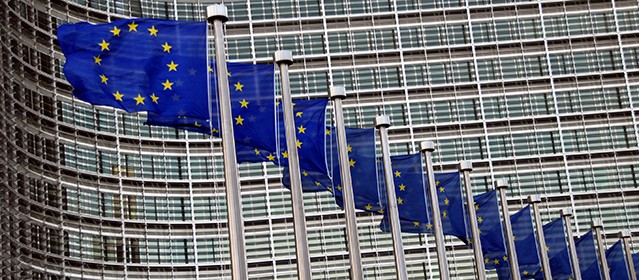
February 2, 2025, the rules for AI in Sweden changed. Now, almost a year later, all companies must act.
EU's AI Act – the world's first comprehensive AI legislation – came into effect almost a year ago. Over 100,000 Swedish companies are affected. Fines can be up to 35 million euros and in 7 months (August 2026), ALL regulations will be implemented.
If you use ChatGPT in your company. If you have AI in your recruitment process. If you're considering AI chatbots for customer service. If you’re developing AI systems. You are affected by the AI Act now – and even more so in 7 months.
This is not "something that's coming". This applies now.
In this guide, you will learn exactly what the AI Act means for Swedish companies, what's currently required, what's coming, and – most importantly – how you ensure that your business complies with the rules.
No legal jargon. No EU directive-clauses. Just straightforward, practical information you can actually use.
Quick Facts: The AI Act in 60 seconds
What: EU's AI Act (Regulation 2024/1689) – the world's first comprehensive AI legislation
When:
✅ February 2, 2025: Ban on certain AI systems + AI literacy requirements (IN EFFECT SINCE 1 YEAR)
📅 August 2, 2025: Requirements for general-purpose AI models (EFFECTIVE IN 6 MONTHS)
📅 August 2, 2026: Majority of all rules come into force (EFFECTIVE IN 7 MONTHS)
Who: Anyone developing, providing, or using AI in the EU (yes, even Swedish SMEs)
Fines:
Up to €35 million OR
7% of global annual revenue
(The highest amount applies)
Purpose: Safe, ethical AI that protects fundamental rights
TL;DR: If you use AI in your company, you must take action NOW.
Part 1: What is the AI Act actually?
The simple explanation
The AI Act is the EU's way of regulating artificial intelligence – much like what GDPR did for data.
Basic Principle: The more dangerous the AI system, the stricter the regulations.
Think of it like traffic rules:
🚶 Minimal risk: Like walking on the sidewalk (AI in video games) – no rules
🚗 Low risk: Like driving a car (AI chatbots for customer service) – some requirements
🚛 High risk: Like a truck carrying hazardous material (AI in recruitment/credit) – strict rules
⛔ Unacceptable risk: Like driving drunk (AI for social scoring) – PROHIBITED
Why does the AI Act exist?
The EU saw that AI was developing faster than legislation. Result:
AI systems that discriminated in recruitment
Facial recognition that violated privacy
Automated decisions without transparency
No clear allocation of responsibility
EU's response: Regulate BEFORE it becomes chaos.
What makes the AI Act different?
GDPR: Protects personal data AI Act: Protects against AI risks (even when no personal data is used)
Example:
An AI system recommending music = GDPR (if personal data is used)
An AI system deciding on loans = GDPR + AI Act (high-risk AI)
Part 2: What has been in effect SINCE February 2, 2025 (Now for a year)
Three important things came into effect on February 2:
1. Ban on unacceptable AI
The following are PROHIBITED in Sweden from February 2, 2025:
❌ Social scoring/Social credit systems
Type: China's social credit system
Example: Ranking employees based on private behavior
Penalty: Prohibited, period
❌ Manipulative AI systems
Type: Subliminal techniques influencing behavior
Example: AI altering text/audio to manipulate purchase decisions without you noticing
Penalty: Prohibited
❌ Exploitation of vulnerabilities
Type: AI exploiting children, elderly, disabled
Example: Voice assistants pushing expensive purchases to the demented
Penalty: Prohibited
❌ Biometric real-time identification in public spaces (with exceptions)
Type: Real-time facial recognition
Example: Cameras identifying people on the street
Exception: Law enforcement in cases of terrorism, kidnappings, etc.
Penalty: Prohibited for companies
❌ Emotion recognition in workplaces and schools
Type: AI analyzing facial expressions to assess emotions
Example: Systems monitoring if employees are "happy enough"
Exception: Medical/security reasons
Penalty: Prohibited
Practical consequence: If your company uses any of the above – STOP IMMEDIATELY. Risk of enormous fines.
2. AI literacy requirement (Article 4)
What it means: Individuals working with AI systems in your company must have "sufficient AI literacy".
What is "sufficient AI literacy"?
The EU defines it as:
Technical understanding of how AI works
Awareness of risks and limitations
Knowledge of relevant regulations
Ability to use AI responsibly
Practical example:
✅ OK:
Marketers using ChatGPT know it can hallucinate
They always fact-check output
They do not feed sensitive data
They have received basic AI training
❌ NOT OK:
HR person using AI for CV screening
Unaware that AI can discriminate
No training
No review of results
What must you do?
Identify who uses AI in your company
Evaluate their current knowledge
Train where gaps exist
Document that training has been conducted
Fines if you ignore this? Yes – from August 2, 2025, this can lead to sanctions.
3. New definitions apply
Definition of "AI system" according to Article 3:
"A machine-based system designed to operate with varying degrees of autonomy and capable of showing adaptability post-deployment and which, for explicit or implicit objectives, draws conclusions derived from input it receives..."
Simple translation: If your system:
Receives data
Learns/adapts
Makes predictions/recommendations/decisions
Operates independently to a certain degree
= It is an AI system according to the EU
Practically:
ChatGPT = AI system ✓
Excel with formulas = Not an AI system ✗
Recruitment tool ranking resumes = AI system ✓
CRM with automated email replies (based on rules) = Borderline case
Part 3: Timeline – When does what apply?
✅ FEBRUARY 2, 2025 (IN EFFECT SINCE 1 YEAR)
What:
Ban on unacceptable AI
AI literacy requirement
New definitions
Affects:
All companies using AI
Especially: HR, security, surveillance
Status:
Companies should have already adapted
Supervision has been active since August 2025
Fines can be imposed
📅 AUGUST 2, 2025 (EFFECTIVE IN 6 MONTHS)
What:
Regulations for "General Purpose AI Models" (GPAI)
Transparency requirements
Technical documentation
Copyright compliance
Affects:
OpenAI, Anthropic, Google (ChatGPT, Claude, Gemini)
Developers of foundation models
Companies using these models (indirectly)
Practically:
ChatGPT/Claude must follow new rules
You as a user: Less direct impact
But: Tools may change terms of service
Fines:
Yes – up to €35M or 7% of revenue
Mainly affects suppliers (OpenAI etc)
📅 AUGUST 2, 2026 (IN 7 MONTHS) ⚠️
What:
EVERYTHING in the AI Act applies
High-risk AI systems must follow strict rules
Risk assessments mandatory
Transparency requirements
Supervisory authorities fully activated
Affects:
ALL companies with high-risk AI
Suppliers of AI systems
Providers (users) of high-risk AI
This is THE big one. Are you ready?
Part 4: Does MY company have to follow the AI Act?
Quick test: Are you affected?
Question 1: Do you use AI systems in your operations?
Yes → Continue
No → You're probably not affected (yet)
Question 2: Do you develop AI systems sold to others?
Yes → You are a "provider" – STRICT requirements
No → Continue
Question 3: In which areas do you use AI?
HIGH-RISK areas (strict requirements from Aug 2026):
✓ Recruitment and HR
✓ Credit assessment/loans
✓ Critical infrastructure (transport, energy)
✓ Education (grading, admission)
✓ Law enforcement
✓ Migration and border control
✓ Legal system
✓ Security components in products
TRANSPARENCY REQUIREMENTS (lighter requirements):
✓ Chatbots for customer service
✓ Emotion recognition
✓ Biometric categorization
✓ AI-generated content (deepfakes)
MINIMAL RISK (no requirements):
✓ AI in games
✓ Spam filters
✓ Spell check with AI
Three types of actors
1. PROVIDER
You DEVELOP AI systems
Sell/distribute to others
Responsibility: Heavy – must follow ALL requirements
2. DEPLOYER
You USE AI systems in your operations
Purchased from someone else
Responsibility: Must ensure proper usage
3. IMPORTER/DISTRIBUTOR
You import AI systems from outside the EU
Distribute within the EU
Responsibility: Compliance control
Example:
🏢 Company A uses ChatGPT for customer service
Role: Deployer
OpenAI = Provider
Requirement: Transparency (tell customers they are talking to AI)
🏢 Company B builds its own AI recruitment tool and sells it
Role: Provider
Requirement: EVERYTHING – documentation, risk analysis, testing, etc
🏢 Company C uses Company B's recruitment tool
Role: Deployer
Requirement: Impact assessment, usage documentation
Part 5: How to become compliant – 7-step plan
Step 1: Inventory your AI systems (Week 1)
What you do: Create a complete list of all AI in the company.
How:
Email all departments: "What AI tools are you using?"
Check software subscriptions
Ask the IT department
Review supplier agreements
Document:
Name of the tool
What it's used for
Who uses it
Supplier
Data that is inputted
Example:
Tool | Usage | Department | Supplier | Risk? |
|---|---|---|---|---|
ChatGPT | Content creation | Marketing | OpenAI | Low |
HireVue | CV screening | HR | HireVue | HIGH ⚠️ |
Drift | Chatbot | Customer service | Drift | Transparency |
Step 2: Classify risk level (Week 2)
For each AI system, assess:
PROHIBITED?
Social scoring? → STOP NOW
Manipulation? → STOP NOW
Biometric surveillance? → STOP NOW
HIGH RISK?
Used in: Recruitment, credit, education scores?
Affects: Employment, access to services, rights?
→ Requires extensive compliance from Aug 2026
TRANSPARENCY REQUIREMENTS?
Interacting with customers?
Generating content?
→ Must inform that it is AI
MINIMAL RISK?
Internal tools without major impact?
→ No formal requirements
Step 3: Ensure AI literacy (Week 3-6)
For EVERYONE using AI:
Basic level training (2-4 hours):
What is AI?
How does it work?
What risks are there?
Basics of the AI Act
Company's AI policy
For HIGH RISK users (extra):
Discrimination risks
Bias detection
Output validation
Documentation requirements
Resources:
Aival Partners – Custom corporate training
IMPORTANT: Document that training has been completed!
Step 4: Create AI policy (Week 7)
Your AI policy should cover:
📋 Permitted use
Which AI tools can be used?
For what purposes?
📋 Prohibited use
What must NOT be done?
What data must NOT be inputted?
📋 Data handling
What data can be used for AI?
GDPR requirements
Data security
📋 Transparency
When must customers/employees be informed?
How do we communicate AI usage?
📋 Division of responsibility
Who is responsible for compliance?
Who approves new AI systems?
Who handles incidents?
📋 Training requirements
Who must have what training?
How often is it updated?
Step 5: For high-risk AI – Conduct risk assessment (From Aug 2026)
If you use high-risk AI, you must perform a "fundamental rights impact assessment" (Article 27).
Questions to answer:
What fundamental rights are affected?
Non-discrimination?
Privacy?
Data confidentiality?
What are the risks?
Can the AI discriminate?
Bias in training data?
Lack of transparency?
How do we reduce the risks?
Human oversight?
Regular testing?
Documentation?
Alternatives?
Are there non-AI alternatives?
Less risky AI systems?
Document EVERYTHING.
Step 6: Check suppliers (Week 8-10)
For every AI tool you purchase:
Ask the supplier for:
✓ Technical documentation
✓ AI Act compliance statement
✓ Risk classification
✓ Instructions for safe use
✓ DPA (Data Processing Agreement)
Questions to ask:
📧 "How do you classify this system according to the AI Act?" 📧 "What documentation can you provide?" 📧 "How do you ensure the system does not discriminate?" 📧 "What measures have you taken for compliance?"
If the supplier cannot respond: → Consider alternative tools
Step 7: Set up continuous monitoring (Ongoing)
Quarterly:
Review which AI systems are used
Update risk assessments
Check that trainings are current
Annually:
Update AI policy
Review supplier agreements
External audit (for high-risk systems)
Upon changes:
New AI system? → Go through steps 1-6
Changed usage? → Reclassify risk
New legislation? → Update policy
Part 6: Compliant AI tools and services
How to choose compliant AI tools
Checklist when evaluating AI tools:
✅ Supplier has clear AI Act documentation ✅ EU-based data storage (or equivalent) ✅ GDPR-compliant ✅ Transparent about how AI works ✅ Human oversight possible ✅ Documentation of training data ✅ Clear terms of use
Recommended compliant tools (per category)
Text & AI Assistants:
ChatGPT Enterprise (OpenAI) – EU data residency
Claude for Work (Anthropic) – GDPR-compliant
Microsoft Copilot (Microsoft) – EU-cloud
HR & Recruitment:
[See current list on Aival.se/category/hr]
NOTE: High-risk area – require extra documentation!
Customer Service:
[See current list on Aival.se/category/customerservice]
Remember: Transparency requirements – inform customers!
Marketing:
[See current list on Aival.se/category/marketing]
Review output for bias and factual errors
Find more tools: Aival.se has 300+ AI tools with compliance information
Get professional help
Need support with AI Act compliance?
Aival Partners helps Swedish businesses with:
✅ Compliance audit
Inventory of AI systems
Risk classification
Gap analysis
✅ Policy development
Customized AI policy
GDPR + AI Act
Implementation support
✅ Training
AI literacy for all levels
High-risk specialization
Certification
✅ Risk assessments
Impact assessments (Article 27)
Bias testing
Documentation
✅ Ongoing support
Compliance monitoring
Updates with legislative changes
Incident handling
Part 7: Fines and sanctions – What happens if violations occur?
Fine levels
Level 1 – MOST SEVERE (€35M or 7% of global turnover)
Use of prohibited AI
Breaches of fundamental obligations
Level 2 – SEVERE (€15M or 3%)
Breaches of obligations for high-risk AI
Breaches of requirements for general-purpose AI models
Level 3 – LESS SEVERE (€7.5M or 1.5%)
Providing incorrect information
Lack of cooperation with supervisory authority
What happens in practice?
If a supervisory authority discovers a violation:
Warning/notice (often the first time)
Order to rectify
Deadline for rectification
Sanction fee if not rectified
Ban on using the AI system
However:
Companies acting in good faith and correcting errors quickly often receive lower fines or warnings instead.
Companies consciously ignoring the rules: Full impact.
Examples from GDPR (indication of what might happen)
Google: €50 million (insufficient consent)
Amazon: €746 million (illegal data processing)
Meta: €1.2 billion (illegal data transfer)
The AI Act will likely follow a similar pattern: Large companies get large fines. SMEs get warnings first.
But: Don't wait to get caught.
Part 8: FAQ – Common questions about the AI Act
General
Q: Does the AI Act apply to my company if we only have 5 employees? A: Yes, if you use AI systems, you are covered. Size does not matter for the Act itself, but small companies often receive lighter sanctions for first offenses.
Q: We only use ChatGPT for brainstorming. Do we need to follow the AI Act? A: Yes, but the requirements are minimal for low-risk use. Make sure that:
Employees have basic AI literacy
You do not input confidential/personal data
You review output before publishing
Q: What happens if our AI supplier does not comply with the rules? A: You as a user can also be held responsible, especially for high-risk AI. Therefore, it's important to verify suppliers' compliance.
Compliance
Q: How do we document AI literacy? A: Save:
Training materials
Attendance lists from training sessions
Certificates/proofs
Test results (if you conduct knowledge tests)
Q: Do we need to hire a legal expert? A: For high-risk AI: Strongly recommended. For low-risk AI: You can manage with guides and checklists.
Q: How often do we need to update our risk assessment? A: At least once a year, and when:
New AI systems are introduced
Existing systems are significantly updated
Usage area changes
Legislation is updated
Specific use cases
Q: We use AI to screen CVs. What applies? A: This is HIGH-RISK AI (from Aug 2026). You must:
Conduct an impact assessment
Regularly test for bias
Document decisions
Have human oversight
Inform applicants about AI use
Q: Our chatbot talks to customers. What do we need to do? A: Transparency requirements apply. You must:
Inform customers that they are talking to AI
Make it clear at the start of the conversation
Offer the option to talk to a human
Q: We develop AI tools for internal use only. Do the rules apply? A: Yes, but the requirements are somewhat lighter than if you sell to others. You still need to follow basic requirements such as risk assessment and documentation.
Timeline
Q: What if we do not become compliant by August 2026? A: Risk of fines. But: Start working towards compliance NOW so you can show good faith if supervised. Document your actions.
Q: Will the rules change in the future? A: Likely. The EU evaluates continuously. But the core principles will remain. Stay updated via Digg or Aival.se.
Tool selection
Q: Where can I find compliant AI tools? A: Aival.se has Sweden's largest library with 300+ AI tools where we indicate which are EU-compliant.
Q: Is open source AI exempt from the rules? A: Partly. If the model is fully open (code + parameters) and freely available, it has fewer requirements. But usage can still be classified as high-risk.
Part 9: Resources and guidance
Official sources
Swedish authorities:
EU sources:
Guidance and support
Free training:
AI tools:
Aival.se – 300+ curated AI tools with compliance info
Filter by: "EU-compliant", "GDPR-secure", "Swedish alternatives"
Professional help:
Aival Partners – Compliance, training, risk assessments
Swedish law firms with AI specialization
Management consultants with AI expertise
Industry organizations
Confederation of Swedish Enterprise: Introduction to the AI Act
Almega: Guidance for member companies
Digitization Council: Guidance for the public sector
Continued learning
Newsletters:
Aival.se's AI newsletter (Swedish AI news + compliance updates)
Digg's newsletter on digital governance
IMY's newsletter on data protection
Communities:
LinkedIn groups on AI compliance in Sweden
AI Sweden's events and webinars
Industry-specific AI forums
Summary: Your Action Plan
This week (NOW - January 2026):
✅ Inventory all AI systems you use ✅ Check if anything is prohibited → STOP immediately ✅ Identify which employees use AI ✅ Share this guide with the management team
This month (January-February 2026):
✅ Classify risk level for each AI system ✅ Complete AI training for relevant employees (if not already done) ✅ Update/create AI policy ✅ Contact suppliers for compliance documentation
Next 7 months (Up until August 2026):
✅ Conduct risk assessments for high-risk AI ✅ Implement full documentation and monitoring ✅ Set up systems for continuous compliance ✅ Get legal review of setup before the deadline
Continuously (2026 and onwards):
✅ Monitor new AI systems introduced ✅ Update documentation upon changes ✅ Follow the development of the AI Act ✅ Adapt when new requirements arise
Final Words: Why it's worth acting now (January 2026)
The AI Act is not a hurdle. It's a competitive advantage.
Companies that have been compliant since the start (Feb 2025):
Avoided fines (obviously)
Built trust with customers
Attracted talent (Generation Z cares)
Won public tenders (often requires compliance)
Found it easier to sell to other EU companies
Learned to use AI better (through structure)
Companies acting NOW (7 months before the big deadline):
Can become compliant in time
Avoid panic implementation
Can do it right from the beginning
Gain a competitive edge against those who wait
Companies waiting until July 2026:
Risk fines when August comes
Must rush through compliance (more expensive + worse)
Lose customers to compliant competitors
Panic
You have 7 months. Use them.
Next steps:
📧 Stay updated: Follow Aival.se newsletter for AI Act updates and new tools
The article is based on the EU's AI Act (2024/1689) and guidance from Swedish authorities including Digg and IMY. It does not constitute legal advice. For specific legal questions, always consult a lawyer or specialist.
Disclaimer: The AI Act is continuously evolving with new guidelines and interpretations. We regularly update this article but advise you to always double-check with official sources and consult a legal expert if necessary.
Aival.se is Sweden's largest AI tool library, helping companies navigate the AI landscape with curated tools, compliance information, and expert consultants. We make AI accessible, safe, and legal for Swedish businesses.
Updated: January 7, 2026.
Read more:



Load more