AI for Marketing: How to Improve Results in 2025
AI for Marketing: How to Improve Results in 2025
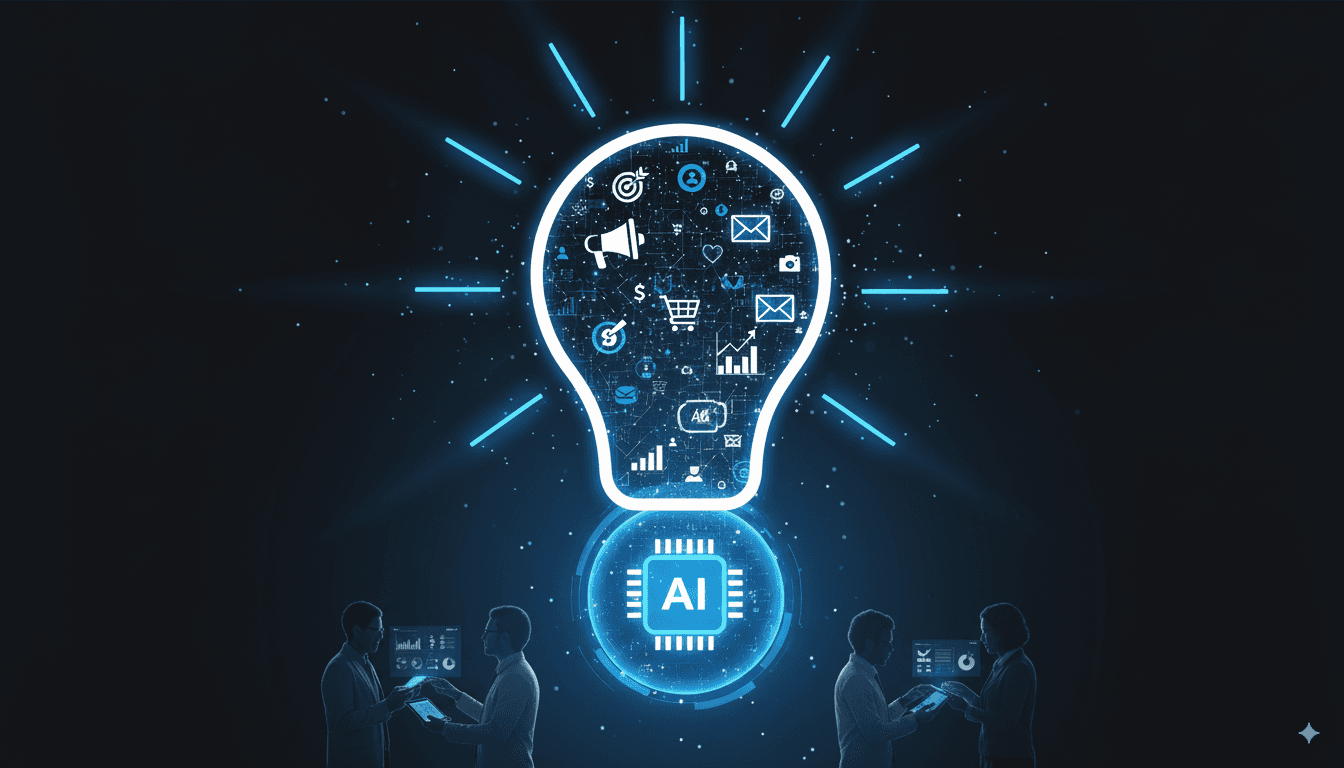
AI has quickly become one of the most valuable resources in marketing. What just a few years ago required large teams and massive budgets can now be done by small businesses with the right AI tools. By analyzing data, understanding target audiences, and creating content, artificial intelligence helps companies reach the right customers, at the right time, with the right message.
In this guide, we go through the five key areas where AI is transforming marketing in 2025, provide concrete examples of how you can use the technology today, and show which tools deliver the best results.
1. Personalization at scale: The right message to the right person
The days when all customers received the same marketing are definitely over. Today's consumers expect personalized experiences, and AI makes it possible to deliver this on a massive scale.
How AI enables personalization
AI can analyze vast amounts of data about your customers:
Behavioral data: Which pages do they visit? How long do they stay? What do they click on?
Purchase history: What have they bought before? When and how often?
Engagement: Which emails do they open? Which ads do they click on?
Demographic information: Age, location, interests, job role
Based on this data, AI can automatically:
Send personalized product recommendations
Customize email content based on the recipient's interests
Display different website versions for different visitor types
Create tailored ads for different target audiences
Concrete example: Email marketing
Traditional way:
A company sends the same newsletter to all 10,000 subscribers with the headline "Weekly Offers".
With AI personalization:
Customer A (who often buys running shoes) receives the subject line: "New Running Shoes – 20% Off Just for You, Emma"
Customer B (who is interested in workout clothes) gets: "Find Your Perfect Training Tights, Johan"
Customer C (who is inactive) receives: "We Miss You – Here's a 30% Discount to Come Back"
Result: AI-personalized email campaigns have an average of 2-3x higher open rates and 5-8x higher conversion rates compared to generic campaigns.
Tools for personalization
HubSpot Marketing Hub – All-in-one with AI-driven personalization
Klaviyo – Email marketing with powerful AI
Dynamic Yield – Real-time web personalization
Optimizely – A/B testing and personalization
Discover more tools: Explore marketing tools on aival.se
2. Content production: Your creative AI partner
One of the most time-consuming parts of marketing is producing content – blog posts, social media updates, ad copy, images, and videos. AI has dramatically changed this.
AI for text content
What AI can do:
Write drafts for blog posts and articles
Generate ad copy variations for A/B testing
Create engaging social media posts
Produce product descriptions
Write SEO-optimized texts
Important to understand: AI does not always produce perfect content directly, but it provides you with a powerful draft to work with. You save 60-70% of the time compared to writing from scratch.
Popular text tools:
ChatGPT – Versatile for all types of text
Jasper – Specialized for marketing content
Copy.ai – Quick generation of shorter texts
AI for visual content
What AI can do:
Generate unique images for social media and ads
Create design variations for A/B testing
Produce product visualizations
Generate video concepts and storyboards
Practical example:
An e-commerce company needs 50 different ad images for a summer campaign. Traditionally, this would cost 50,000-100,000 SEK and take weeks. With AI image generators, they can produce all images in a few hours for a fraction of the cost.
Visual AI tools:
MidJourney – High-quality AI images
DALL-E 3 – Integrated with ChatGPT
Canva AI – Design with AI assistance
AdCreative.ai – AI-generated ads
Best practice for AI content
Do:
✅ Use AI for drafts and inspiration
✅ Edit and add your unique voice
✅ Combine AI content with human expertise
✅ Test different variants and measure results
Don't:
❌ Publish AI content without review
❌ Copy AI text word for word
❌ Rely solely on AI for strategic decisions
❌ Forget to fact-check AI-generated information
3. Data analysis and optimization: AI that never sleeps
Traditional marketing analysis requires hours of manual work – gathering data from various sources, creating reports, identifying patterns. AI does this automatically and in real-time.
Real-time campaign optimization
What AI can do:
Modern AI can analyze campaigns as they run and make automatic adjustments:
Ad budgeting: Automatically shift budget to the ads that perform best
Targeting: Adjust target audiences based on who actually converts
Bidding: Optimize bids in real-time for the best ROI
Timing: Identify when your target audience is most active and show ads then
Real-world example:
An online store runs ads on Facebook and Google Ads. The AI system notes that ads for women's sneakers perform better in the evenings and on weekends, while running shoes convert best on weekday mornings. The system automatically adjusts when ads are shown and to whom, increasing ROI by 40%.
Predictive analysis
AI can not only analyze what has happened but also predict what will happen:
Which customers are most likely to buy next month?
When will demand for different products peak?
What types of campaigns will work best for the coming season?
Which leads are worth prioritizing?
Tools for analysis and optimization:
Google Analytics 4 – AI-driven insights and predictions
Meta Advantage+ – Automatic ad optimization
Mixpanel – Product analytics with AI
Segment – Customer data platform with AI
Key Performance Indicators to focus on
With AI, you can track and optimize:
CAC (Customer Acquisition Cost) – Cost per customer
ROAS (Return on Ad Spend) – Return on ad spend
CLV (Customer Lifetime Value) – Total customer value over time
Conversion Rate – Percentage of visitors who convert
Engagement Rate – How the audience interacts with content
AI helps you not only measure these but also identify exactly what impacts them and how you can improve.
4. Lead generation and customer journey: AI as a guide for customers
Identifying potential customers and guiding them through the buying journey is one of marketing's most important tasks. AI makes this more efficient than ever.
Intelligent lead scoring
Not all leads are equally valuable. AI can automatically assess and rank leads based on:
Demographic information: Do they fit your ideal customer profile?
Behavior: Have they visited your key pages?
Engagement: Do they open emails? Download content?
Timing: Are they in the right stage to buy?
Result: Sales teams can focus on the leads that will actually convert instead of chasing cold contacts.
Practical example:
A B2B company receives 500 leads per month. Traditionally, the sales team contacts all, but only 5% convert. With AI lead scoring, the 50 leads with the highest likelihood to buy are identified, and the sales team focuses there. The conversion rate triples.
Automated customer journey (Customer Journey)
AI can create personalized journeys for each customer based on their behavior:
Example of an automated customer journey:
Step 1: A visitor downloads a guide on "AI for Small Businesses"
AI automatically sends a thank-you email with related content
Step 2: The visitor opens the email and clicks an article
AI notes the interest and sends a case study after 2 days
Step 3: The visitor visits your pricing page
AI triggers an email with customer reviews and offer
Step 4: The visitor adds a product to cart but abandons
AI sends an automatic reminder + limited-time discount
Result: Personalized, automated customer journeys can increase conversion by 30-50% compared to manual, generic flows.
Chatbots and conversational marketing
AI-driven chatbots can:
Answer common questions 24/7
Qualify leads through smart questions
Automatically book demos and meetings
Provide personalized product recommendations
Guide visitors to the right content
Tools for leads and customer journey:
Drift – Conversational marketing with AI
Intercom – AI chatbots and customer communication
HubSpot – Lead scoring and automation
Pardot (Salesforce) – B2B marketing automation
5. Social media: AI as a content machine
Social media requires constant activity and engagement. AI helps you keep things running without having to be online 24/7.
Content scheduling and optimization
What AI can do:
Analyze when your audience is most active
Suggest the best times to post
Automatically publish content at optimal times
Adapt content for different platforms (LinkedIn, Instagram, Facebook)
Hashtag optimization
AI can:
Suggest relevant hashtags based on content
Identify trending hashtags in your niche
Analyze which hashtags drive the most engagement
Sentiment analysis
AI can analyze comments and mentions to understand:
How people talk about your brand
Which topics engage the most
Negative or positive response to campaigns
Emerging trends to jump on
Influencer identification
AI can find relevant influencers by analyzing:
Engagement (not just number of followers)
Audience fit
Authenticity
Past campaign results
Social media AI tools:
Buffer – Scheduling with AI recommendations
Hootsuite Insights – AI-driven analysis
Sprout Social – Social listening and analysis
Later – Visual content planning with AI
Getting started with AI marketing
Step 1: Identify your biggest need
Ask yourself:
Where do we spend the most time in our marketing efforts?
Which area currently provides the lowest ROI?
What do we most want to improve: reach, engagement, or conversion?
Step 2: Start with one tool
Don't try to implement everything at once. Choose an area:
Need content? → Start with ChatGPT or Jasper
Want to optimize ads? → Try AdCreative.ai
Need better analytics? → Upgrade to AI-driven analytics
Want to automate the customer journey? → Implement marketing automation
Step 3: Measure and optimize
Set up clear KPIs before you start:
What do you want to improve? (e.g., conversion rate, CTR, CAC)
What is your current state?
What is the goal after 3 months?
Step 4: Scale up based on results
When you see results from one tool, expand to the next area. Gradually build your AI marketing stack.
FAQs about AI marketing
Do AI tools cost a lot?
No! Many powerful tools have free versions or start from 20-50 USD/month. Even with a limited budget, small businesses can benefit from AI.
Do I need technical expertise?
No. Modern AI marketing tools are designed for marketers, not programmers. Most have intuitive user interfaces.
Does AI replace marketers?
No. AI automates repetitive tasks and provides better data, but strategy, creative direction, and brand building require human expertise.
How long does it take to see results?
It varies, but many see improvements within:
Content production: Immediately (save time instantly)
Ad optimization: 2-4 weeks
Lead scoring: 1-2 months (needs data)
Personalization: 1-3 months
Does AI work for B2B or just B2C?
AI works great for both B2B and B2C! B2B companies benefit significantly from lead scoring, content creation, and account-based marketing with AI.
Conclusion: AI gives you superpowers in marketing
AI has democratized marketing. What once required large teams, enormous budgets, and advanced technical expertise is now accessible to companies of all sizes.
The five areas where AI has the most impact:
Personalization – The right message to the right person
Content production – Create more, faster
Analysis & optimization – Data-driven decision making
Lead generation – Find and convert more customers
Social media – Keep engagement high automatically
The key to success: Start small, test, measure results, and scale up. AI is a tool that enhances your marketing – it does not replace human strategy and creativity.
Ready to transform your marketing?
Explore hundreds of AI tools for marketing at aival.se. Find the tools that suit your business and start improving your results today!
Find AI tools for marketing: aival.se/tools/marketing
Find tools to help with marketing here.
Date: July 27, 2025
Written by: aival.se
Read more: