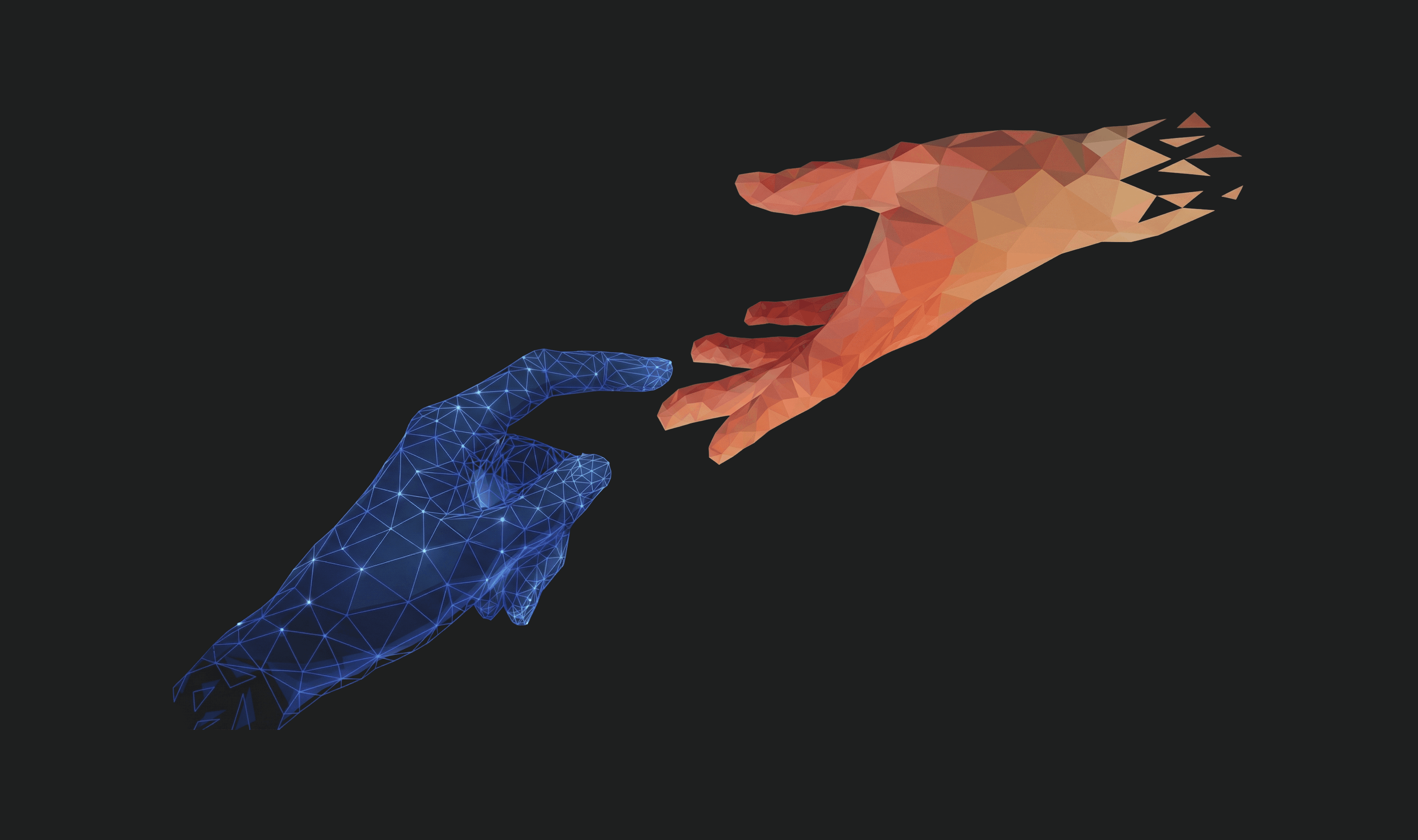
Why has Claude taken over lately?
Claude has surpassed ChatGPT on the App Store – but what is behind the big shift?
Claude beats ChatGPT – how it happened
Only a year ago, ChatGPT was the obvious answer to the question "which AI should I use?". But in 2026, something has changed. Claude climbs the app charts, companies switch platforms, and social media is flooded with posts from users describing their switch as "finally finding the right one". What exactly is happening and why now?
Numbers that no one can ignore
It starts with data that is hard to dismiss. On March 2, 2026, Claude was downloaded 149,000 times in a single day in the USA, surpassing ChatGPT's 124,000 downloads on the same day for the first time. Simultaneously, Claude.ai reached 290 million visits in February, an increase of 43 percent compared to the previous month. ChatGPT decreased by 6.5 percent during the same period.
This is not about a coincidence or a viral moment. Paid subscribers to Claude Pro and Max have more than doubled since January 2026, and free users have grown by over 60 percent. Anthropic reports record numbers of new registrations day after day.
The trust that changed everything
The growth cannot be explained by a single feature update or a clever marketing move. Instead, it was triggered by an ethical decision that had a massive impact.
In January 2026, Anthropic refused to allow the US Department of Defense (Pentagon) to use Claude for mass surveillance of American citizens or fully autonomous weapons systems. Hours later, OpenAI announced a partnership with the same department, a collaboration that stood in direct contrast to Anthropic's decision.
The reaction on social media was immediate. Thousands of users began sharing screenshots with headlines like "I'm switching to Claude" and guides on how to export their ChatGPT history. It was one of the first major migration movements in AI history, driven by values, not performance.
As an analyst at Built In summarized it: AI assistants are becoming infrastructure. And when something becomes infrastructure, you care not only about what it can do but also about who builds it and what rules they set.
Developers came first
Parallel to the ethical debate, something else was happening: Claude took over among developers.
Claude Code was launched in May 2025 and reached one billion dollars in ARR by November the same year, faster than any enterprise software product in history. By February 2026, the run rate was estimated at 2.5 billion dollars.
It is a remarkable number, but what it really signals is more important: when developers choose an AI tool to integrate into their workflows, the rest of the organization tends to follow. Claude entered through the back door, the code terminals, and spread from there throughout the company.
34 percent of all tasks performed on Claude involve code and mathematics. It is the dominant category, shaping how the platform is perceived: precise, reliable, and good at actually solving problems rather than just articulating well.
Companies have already made their choice
While consumer debates rage on TikTok and X, the B2B market has already made its decisions.
70 percent of Fortune 100 companies use Claude. Claude's market share in enterprise AI went from 18 percent in 2024 to 29 percent in 2025, an increase of 61 percent in one year. Anthropic's revenue grew from 1 billion dollars in ARR in December 2024 to 14 billion in February 2026, a tenfold increase over 14 months.
Companies like Cognizant have trained 350,000 employees on Claude. Accenture has launched 30,000. Integration exists in over 6,000 apps. It is no longer an experimental phase; it is large-scale deployment.
The reason is the same one driving the consumer switch: trust. Anthropic's data policy ensures that customers' inputs are not used to train the model. For a law firm, a hospital, or a bank, this is not a minor detail—it is crucial.
Why do people stay?
One statistic stands out more than most: Claude has the longest average session time of all AI chatbots—18 minutes per session. That's twice as long as most competitors.
This says something about how Claude is used. Not for quick answers to simple questions, but for longer, coherent work. Writing, analyzing, iterating, building. According to many users, Claude feels more like a colleague you work with than a search tool you just ask questions.
Anthropic describes 52 percent of all Claude.ai conversations as "augmentation mode"—a collaborative mode where the user and Claude iterate on a task together. It's a different way to use AI, creating a stronger dependency than one-off answers do.
Super Bowl, memes, and mass media
It would be unfair to ignore the communications effort. Anthropic bought Super Bowl ad time in 2026 and aired commercials that directly mocked ChatGPT's decision to start showing ads to its users. The message was simple: Claude will never do that.
The commercials went viral. Sam Altman, CEO of OpenAI, publicly commented on them, giving Anthropic even more attention. It was PR genius, setting a narrative in motion that was hard to beat: Claude as the serious, principled alternative to a ChatGPT being commercialized.
Is ChatGPT out?
No, not even close. ChatGPT is still the largest AI platform in the world in terms of total users. OpenAI continues to grow, and no migration has shaken their fundamental dominance.
But what has changed is that users and companies are now actively evaluating their choices. Loyalty to a single platform is no longer a given. And in the landscape that has emerged, Claude, with its combination of technical skill, ethical stance, and enterprise focus, is the strongest option.
Summary
Claude's growth in 2026 is not a hack or a trend. It is the result of three converging factors: an ethical choice which built trust, a product (Claude Code) that captured developers, and a clear positioning towards the enterprise market—something ChatGPT never prioritized in the same way.
Want to try Claude yourself? On Aival, you will find a comprehensive overview of Claude and other leading AI tools, so you can compare and find the right tool for your specific needs.
Read more:


Load more